Homeowner guide
Signs You Need a New Roof — Plus Ice Dams & Storm Documentation
The Grand Rapids homeowner's roofing manual: how to read your roof's warning signs, why ice dams keep flooding West Michigan ceilings, and how to document storm damage the right way. Updated September 2026.
Quick answer
In Michigan conditions, treat these as replacement-level warnings: widespread curling shingles, bald patches from granule loss, leaks in more than one area, sagging decking, or an asphalt roof past ~20 years. A single leak on a younger roof is usually a repair. Winter ceiling stains near exterior walls usually mean an ice dam, not a bad shingle.
The signs, from the ground up
1. Granules in the gutters
Granules are the shingle's sunscreen. Finding handfuls at downspout outlets — especially after storms — means the shingles are going bald, and UV and hail now hit the mat directly. Some loss is normal on a new roof; increasing loss on a 15+ year roof is the countdown.
2. Curling, cupping or clawing shingles
Edges curling up or middles cupping means the shingle is shrinking with age and losing its seal. Freeze-thaw accelerates it. Scattered curl on one sunny slope is watch-and-wait; roof-wide curl is replacement planning time.
3. Missing or cracked shingles after every wind
A roof that sheds a shingle in every blow off Lake Michigan has brittle, seal-failed shingles. Repairs stop sticking — literally — because the surrounding shingles crack when lifted.
4. Daylight or sagging in the attic
Go into the attic on a sunny day, lights off. Pinholes of daylight, stained or dark-streaked decking, a musty smell, or a ridge line that sags between rafters are structural warnings — this moves the timeline from "someday" to "this season."
5. The 20-year mark in Michigan
Manufacturer ratings assume gentler climates. Lake-effect snow, freeze-thaw and hail mean a Grand Rapids asphalt roof at 18–22 years is statistically near the end even if it looks passable. If you don't know the roof's age, the seller's disclosure or the last permit usually tells you.
6. Your neighbors are re-roofing
Homes in a subdivision were built and roofed together. When three houses on your Kentwood or Wyoming street get new roofs in one summer, yours is on the same clock.
Not sure which side of the line you're on? A free inspection from a local company settles it — see the directory, and compare notes with what replacement involves.
Ice dams: the Grand Rapids specialty
Every winter, lake-effect snow blankets West Michigan roofs. Heat escaping from the living space warms the upper roof deck, melting the underside of the snowpack. Meltwater runs down to the eave — which overhangs the house and stays cold — and refreezes. Layer by layer, an ice ridge builds. Once the dam is tall enough, meltwater pools behind it and backs up under the shingles, dripping into soffits, wall cavities and ceilings. That's why a Grand Rapids ceiling stain in February is an ice dam until proven otherwise.
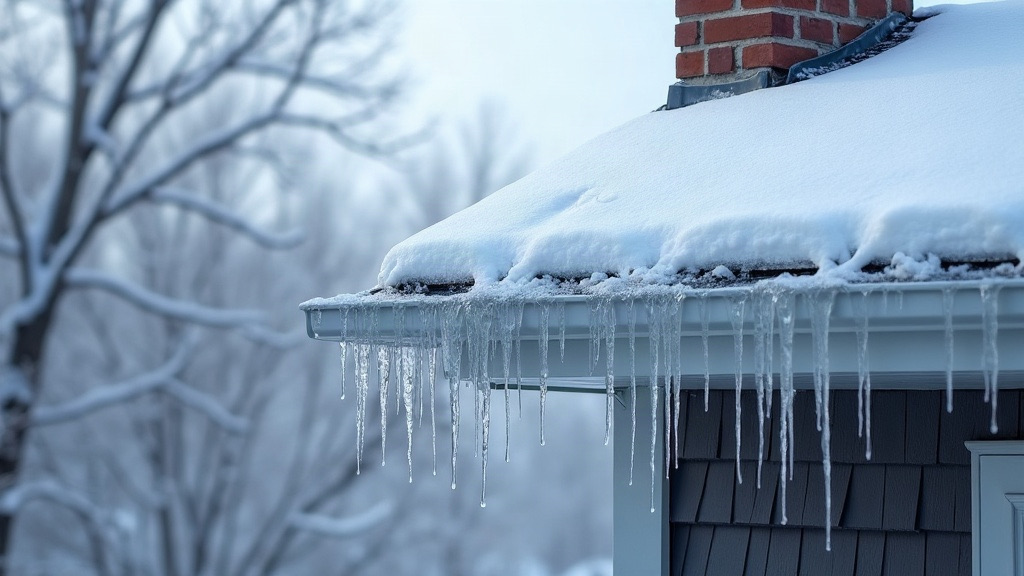
What actually fixes them
- 1.Air-seal the attic floor. Can lights, bath fans, plumbing chases and the attic hatch leak warm air — sealing them stops the melt at its source. This is insulation contractor work, and several roofing companies (Summit Point, Victors, Mr. Roof, West Michigan Roofing) list attic insulation alongside roofing.
- 2.Insulate to Michigan code levels. Aim for roughly R-49 to R-60 on the attic floor. Most older Grand Rapids homes sit far below that.
- 3.Balance ventilation. Continuous soffit intake plus ridge exhaust keeps the deck uniformly cold so snow doesn't melt unevenly in the first place.
- 4.Ice-and-water barrier at re-roof time. Self-adhered membrane from the eave to at least 24 inches inside the warm wall line (typically two courses) is the last line of defense when a dam does form.
What to do about an ice dam right now
From the ground: pull snow off the eaves with a roof rake after each storm (this removes the dam's raw material). For an active dam with interior leaking, a steamer — not a hatchet — is the pro tool; some local companies run dedicated ice dam removal crews in winter. Never chip ice off shingles (you'll remove granules and crack the shingle), never climb an icy roof, and skip salt — it kills landscaping and corrodes gutters. Calcium chloride in a fabric tube laid across the dam is the safe DIY channel-melter.
Documenting storm damage (before you call anyone)
Good documentation is the difference between a smooth claim and a denied one — and it starts before any contractor or adjuster arrives. This is process guidance, not insurance or legal advice; your policy language controls.
- Note the date and time of the storm. Screenshot a weather report or radar archive for that day — hail swath data exists for most Kent County events.
- Photograph wide, then close. Every elevation of the house, then details: granule piles, dented downspouts, torn screens, damaged siding, debris in the yard, interior stains. Photograph undamaged areas too — context matters.
- Don't repair before documenting — but do mitigate (tarp, contain water) to prevent further damage, which policies require. Keep receipts.
- Get a local roofer's inspection report with on-roof photos and a written scope before filing — it tells you whether the damage clears your deductible at all. Storm specialists in the directory do this free.
- Keep a log. Every call, name, date and promise, from the roofer and the insurer alike.
More on the storm workflow and storm-chaser warnings:storm damage roof repairand hail damage repair.
Frequently asked questions
Widespread curling or cupping shingles, heavy granule loss (bald patches, granules in gutters), multiple leaks in different areas, a sagging deck, cracked or missing shingles across slopes, and a roof past 20 years in Michigan conditions. Any one of these warrants an inspection; several together usually mean replacement.
Architectural asphalt shingles typically deliver 20–30 years here, toward the lower end because of lake-effect snow, freeze-thaw cycles and hail. Metal roofs run 40–60+ years. Installation quality (ventilation, ice-and-water barrier) matters as much as the material.
You can safely rake snow from the eaves with a roof rake from the ground and fill pantyhose with calcium chloride to melt channels. Do not chip ice with tools (you'll destroy shingles) and do not climb an icy roof. Permanent fixes are attic air sealing, insulation, ventilation and ice-and-water barrier.
Free quotes by phone
Not Sure What Your Roof Is Telling You?
A free inspection from a licensed local roofer settles it. Call now and describe what you're seeing. You can also call the licensed local roofing companies inour directorydirectly — every listing shows its own phone number.
- ✓Licensed Michigan contractors (verify on LARA)
- ✓No obligation, no sign-today pressure
- ✓Storm, hail and ice-dam specialists available